RESEARCH:
SETTING THE standard FOR HUMAN PERFORMANCE
When the internet was invented, we needed a standard language that allowed web browsers to easily crawl through the sea of information shared. That language is now known as html. But with human performance modeling – which is the language used to simulate human behavior in training exercises – no standard exists. Therefore, it becomes very difficult for models to work together. Enter HPM-ML – an effort to create standardization, which like html, opens the door for innovation.
STANDARDIZED MARKUP LANGUAGE
Project Details
Proposal Title:
HPM-ML: Human Performance Modeling Markup Language
Agency:
Missile Defense Agency
Contract Number:
HQ0147-13-C-7414
Start Date:
2012
The modeling and simulation of human performance is difficult because there is no uniform framework for expressing the content and structure of a human performance model. The inability to communicate model structure and content is a major impediment to assessing the validity, plausibility, and extensibility of human performance models. HPM-ML is focused on the development of a uniform language for expressing the structure and content of a model.
How We Did It
Our goal in developing HPM-ML was not to impose top-down methodological standards across human performance modelers, but rather to provide a common vocabulary to express what is already contained in current models.
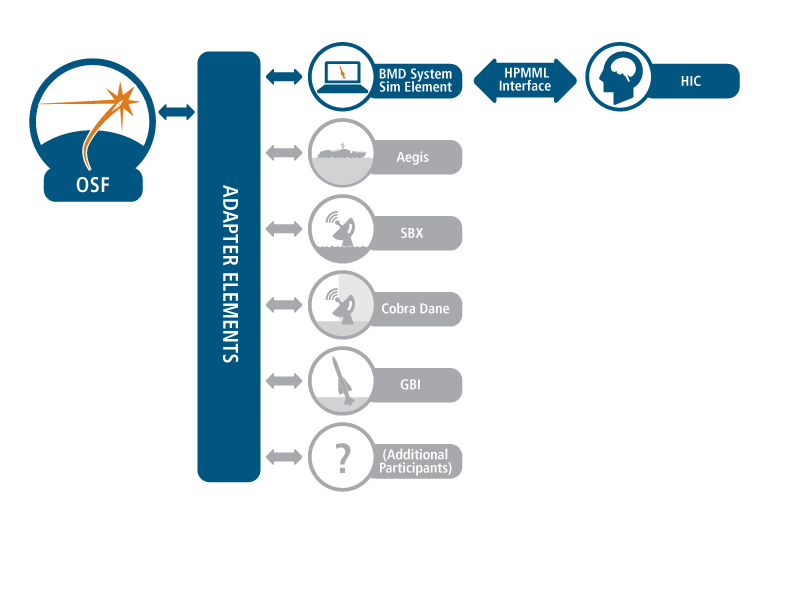
By standardizing the description of human performance models, HPM-ML re-aligns the activities of the human performance modeler with the broader simulation community in three respects. First, an unambiguous specification of a human performance model makes it easier to define software interfaces to larger simulation systems. Second, we identified overarching design patterns that span different modeling approaches. Common mechanisms can be found in a variety of cognitive modeling tools; the proposed effort is predicated on the additional claim that these mechanisms are used in similar ways to solve modeling problems. Third, HPM-ML provides a framework to achieve the reuse and composition of those models, an approach that has been essential to programs in software engineering but that has so far eluded the field of HPM, severely limiting the complexity and power of those models.