How can you design event experiences that fuel and sustain change?
Traditional event planning focuses on perfecting logistics. Intentional experience design focuses on creating experiences that impact people before, during, and after an event. To create an experience centered on your people, consider what you want them to feel, think, and do during every step of the experience, and then design moments aligned to those desired emotions, mindsets, and actions. By impacting your people’s mindsets and emotions, you can inspire action and create sustained learning and change.
The experts in this EXLEARN Talks episode discuss trends that have impacted their experience design approach and methods for sustaining mindset and behavior changes after an event ends. They also share TiER1’s Event Design Canvas—a framework for centering people in your experience design process. They provide insight on the following questions:
-
- 8:21: What’s the difference between an event and an experience?
- 11:24: How do you keep the human at the center of an experience as opposed to the logistics?
- 16:43: How do you design an event that encourages participants to shift out of their current assumptions?
- 19:27: What trends in the event or experience design space are impacting the field right now?
- 22:11: How does an event look different when you plan experiences that meet participants’ mental and neurological differences?
- 25:09: What are common mistakes people make when planning event experiences, and how might they overcome or resolve those?
- 29:01: How do you design event experiences that help sustain mindset or behavior change among your participants?
- 35:34: How can people start thinking about event and experience design differently than they previously have?
- 46:55: How do you respond when something inevitably doesn’t go “right” or the way you planned?
- 51:11: How might you persuade clients or stakeholders of the importance of investing time and energy into the “entice” and “extend” phases of your Event Design Canvas?
- 57:10: As a practitioner who designs events and experiences, how do you keep upskilling in this space?
Highlights from the Panelists:

“There are logistics that you have to get done, but when you truly put your participant at the center of everything—before, during, and after—and really think about OK in this moment—because those moments matter—how do we want these people to feel? What do we want them to think about and actually do? We want to be thoughtful and by putting that extra attention to it…it makes it more of that experience and it has much more of an ability to sustain [learning and change] after that moment in time.”
– Beth Cavanaugh, Principal at TiER1 Performance

“If you’re in the corporate world looking for sustainment, there’s a change management piece that wraps whatever experience you’re providing in a way that communication—in alignment to organizational strategy and goals—continues after the event. You might send little gifts [to] people’s desks…ways to remind them of what they’ve done. There might be a core group that works to ensure communications are happening in the right way [and is] taking the pulse of the organization and understanding or measuring the magnitude of change in behavior over time.”
– Andy Erickson, Senior Solutions Consultant at TiER1 Performance
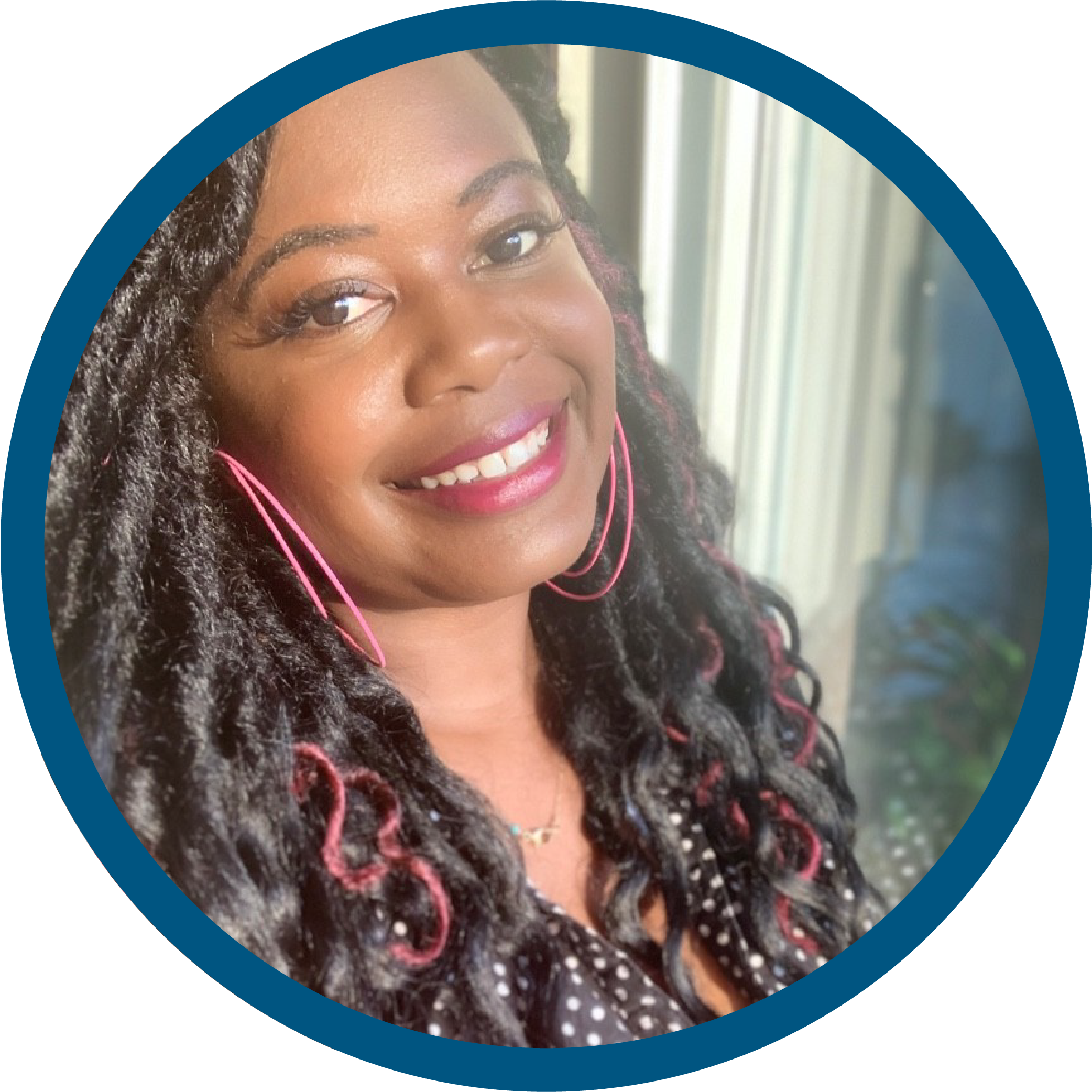
“[At Joy Channel] we love to create experiences that give people a space to pause and step away from the way things normally are. When an event brings you into an experience that’s different from your ‘typical’ way of doing things, you’re able to pause and examine [how you might do something differently]. I love the adjustment of what I earlier said about [an event being] something that happens to you to something that happens with you, because the most important thing about any experience is that it’s communal—that that shifting is happening in groups.”
– Luna Malbroux, Founder & CEO of Joy Channel
A Visual Capture of the Discussion:
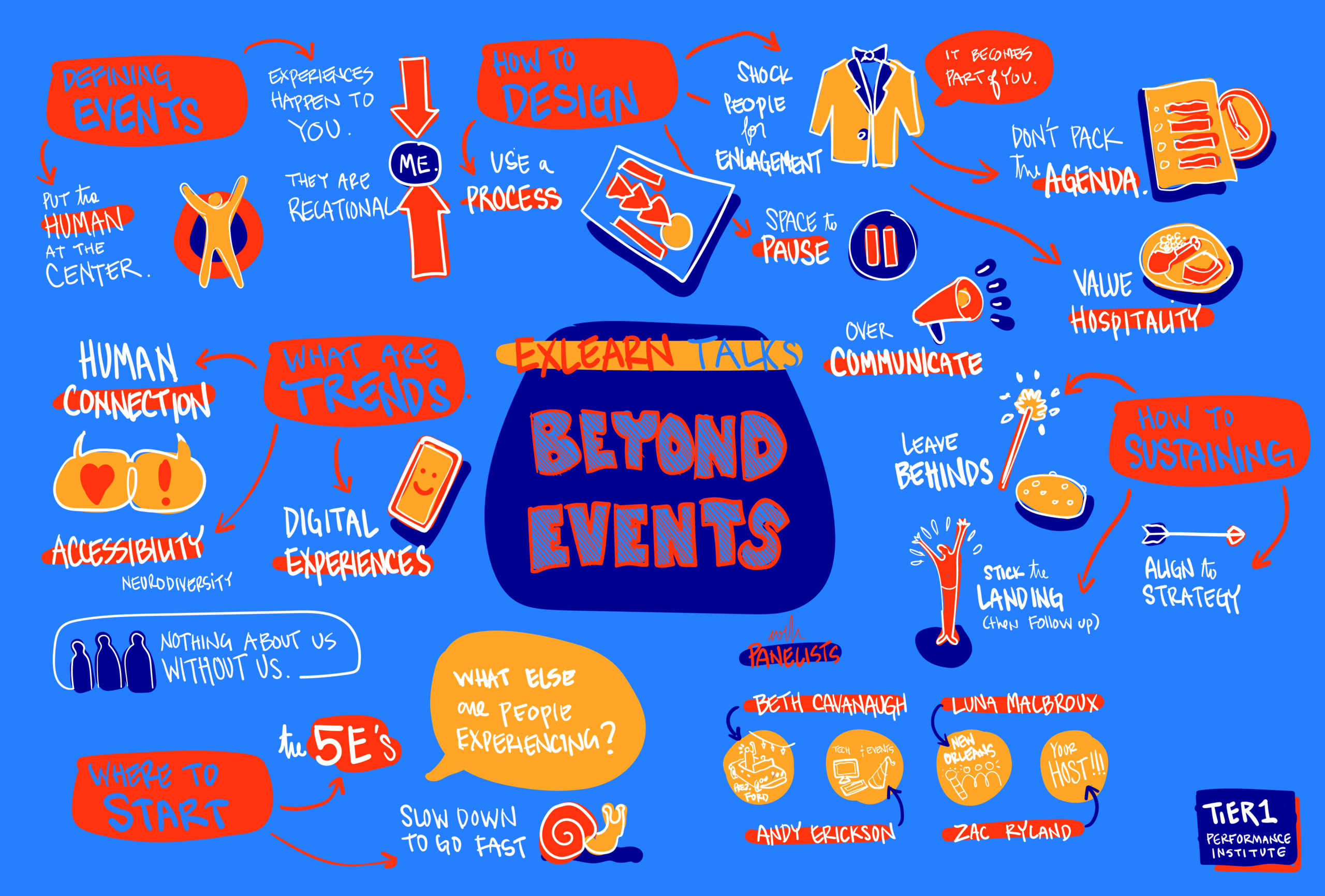
Designed by Ramsey Ford