How can organizations support their leaders in embracing a strengths-based performance management approach?
Research shows that strengths-based performance management benefits organizations and employees alike. Employees experience more job satisfaction and less stress, positively impacting their overall well-being, while organizations benefit from increased engagement and performance, which drives better business results.
So why is implementing a strengths-based approach so difficult? Organizations must go beyond simply providing employees with strengths assessments and train leaders and people managers to develop personal, collaborative relationships with direct reports so they can regularly discuss their experience at work and how they might apply their skills in unique ways to achieve their growth goals.
The experts in this EXLEARN Talks episode discuss how organizations can overcome the stigma surrounding performance management and help their people adopt a new mindset to embrace a strengths-based approach. They provide insight on the following questions:
-
- 9:38: What is performance management and what’s the desired outcome?
- 15:30: What stigma exists around performance management and performance management conversations and why?
- 21:49: What evidence exists that a strengths-based performance management approach drives business results?
- 28:15: What’s one authentic, natural strength of yours?
- 32:22: Does a strengths-based approach mean that there’s no accountability for employees to improve their performance in areas of weakness?
- 38:04: How do we break the cycle of defaulting to assessment for informing strengths-based performance management? What’s a new mindset that could help us approach this work in a different way?
- 44:32: What are easy ways to build collaboration between managers and direct reports to support a strengths-based approach?
- 52:12: How can we support leaders and managers on their journey to embrace a strengths-based performance management approach?
Highlights from the Panelists:

“Internal mobility is one space that we have so much opportunity to make a difference in. From an HR perspective, we have a lot more visibility into the changes that are happening in the business, so trying to connect the dots for people [is important]. Have conversations with leaders to say, You’re talking about this employee in this way, they might be able to transfer their skills easily to this other [initiative or role]; let’s have a conversation and see if they’re interested. I think there are a lot of opportunities to get that information in more just-in-time ways [than standard surveys or assessments].”
– Clare Jeong, Senior Manager at Talent Management
“Our jobs are more complex than [they were in the past], but people have always been dynamic. We’re having this realization at work that we’re not just the job that we do. When we talk about equity, belonging, inclusion, and diversity, it’s about celebrating the uniqueness that each person brings, which means that we have to honor the different ways that people can get to the solution… We [all have] different thoughts and lived experiences that help to shape why [we take different routes to arrive at the same solution].”
– Breanna Jackson, Founder and Principal at The Refining Company

“What kind of mindset do we need [to embrace a strengths-based approach]? One of curiosity and connection. If we [ask ourselves] everyday, How can I be more curious about this person? How can I connect the dots or connect with this person a little bit more?, I think that would solve a lot of this, and it’s a ways of working, not a check-the-box item.”
– Chris Schindler, Senior Solutions Consultant at TiER1 Performance
A Visual Capture of the Discussion:
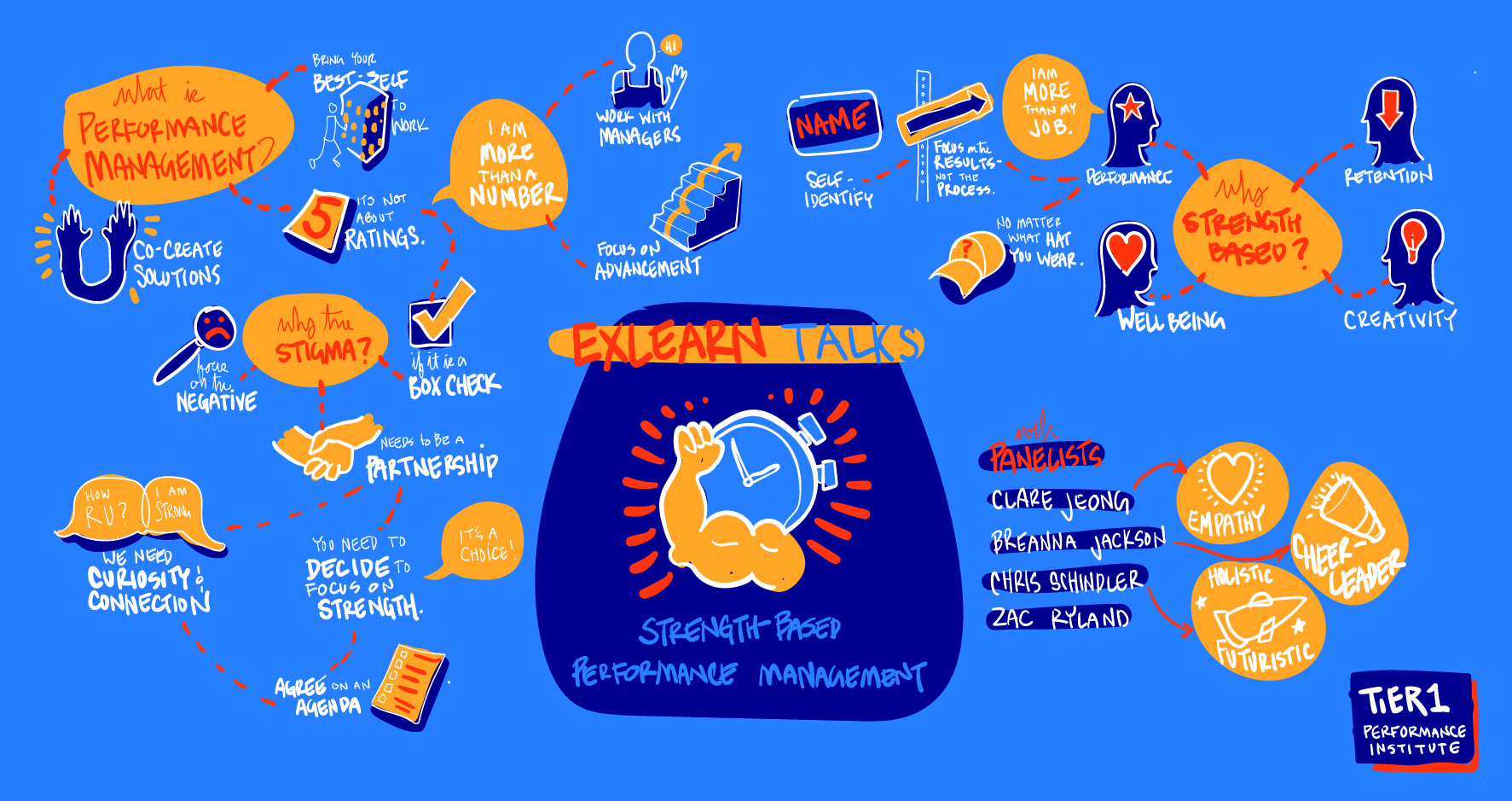
Designed by Ramsey Ford