3 Minute Read
Do you wish you could read someone’s mind? If you’ve ever led an organizational change, you’ve probably wanted to know exactly what your stakeholders are thinking.

Jordan Rickard
5 Minute Read
Do you wish you could read someone’s mind? If you’ve ever led an organizational change, you’ve probably wanted to know exactly what your stakeholders are thinking.
As far as I know, mind-reading technology is not yet available to us. Thankfully, we do have the next best thing: neuroscience, the scientific study of the human nervous system. This ever-growing field continues to expand our understanding of the brain and provide insights into how humans think, feel, and behave. Given its focus, it’s no surprise that neuroscience is now being applied to change management.
The following insights and accompanying tips won’t make you a mind reader, but they may help you become a mind translator—someone who understands what the brain thinks when faced with change and knows how to work with the brain to better facilitate change in an organization.
People are rational—and emotional—and impulsive
OK, quick science lesson. The human brain is the product of millions of years of evolution. It continually adapted and evolved over time to survive in constantly changing circumstances. Because of these evolutionary developments, the brain is often described as three brains in one.
Neocortex or Human Brain develops language, is capable of vast learning, conceives of time, and plans for the future. It also mitigates the impulses of the primitive and limbic brains.
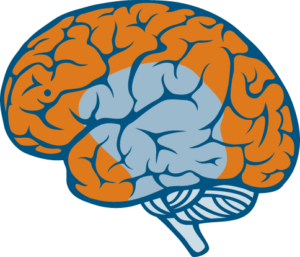
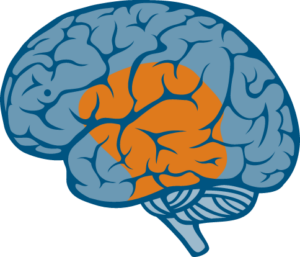
Limbic or Social Brain developed in mammals to survive in a social world, such as bonding with a mother and cooperating with members of a tribe. It senses fairness and passes judgment.
Primitive or Reptilian Brain is the oldest part of the brain and controls the body’s vital functions; it’s adept at sensing threats and danger.
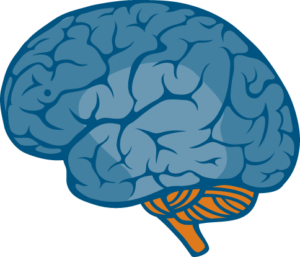
Neocortex or Human Brain develops language, is capable of vast learning, conceives of time, and plans for the future. It also mitigates the impulses of the primitive and limbic brains.
Limbic or Social Brain developed in mammals to survive in a social world, such as bonding with a mother and cooperating with members of a tribe. It senses fairness and passes judgment.
Primitive or Reptilian Brain is the oldest part of the brain and controls the body’s vital functions; it’s adept at sensing threats and danger.

When planning any change, understand that you’re dealing with three brains in one person, and each brain has a different trigger. So, be sure to minimize surprises (primitive), be as equitable as possible (limbic), and create meaningful opportunities for people to conceptualize the future state (neocortex). This approach will reduce the impulsive and emotional responses of the primitive and limbic brain. It also encourages the adaptable and self-regulating capabilities of the neocortex.
Ready to talk about how we leverage neuroscience for more effective change? Get in touch with us!

Planning change? TiER1 has helped hundreds of organizations though times of transition. Learn how.
Brains hardwire repeated behavior.
Your brain uses 20 percent of your total energy every single day. To help conserve energy, the brain hardwires repeated behaviors so they become automatic, rather than making the brain “work” to complete them (which would use up energy).
When a person learns to do something, such as typing on a keyboard, their brain develops connection points across the brain that enable their fingers to tap out letters, words, and sentences. Repeat this over and over and that person no longer has to “think” to type. Now, imagine the QWERTY keyboard is replaced with a newly designed keyboard that requires a new way of typing.
The brain doesn’t like this; it invested lots of energy to enable the old way of typing. So, the brain releases noxious neurochemicals when a person attempts the new behavior, such as using the pinky finger to hit the spacebar. The brain is screaming: “Stop! That’s not how we do this,” because it wants to stay in autopilot and conserve energy.
People’s brains must develop new neural connections to enact new behaviors. This is physically draining work. Change programs must account for the time, space, and resources people need to get their brains wired for the future state.
TiER1 specializes in the art and science of change in organizations. Follow the link to learn how.
Ready to address your Change Challenges and how our expertise can help enact new behavior? Let’s talk!
Mental models are hardwired too.
Just like behaviors, a person’s mental model, or way of thinking, is hardwired in their brain as well. Contradictions to a mental model can be a major energy drain on the brain. To save energy, the brain either ignores the inconsistent information or seeks out confirming information. It also sends strong, pleasure-inducing neurochemicals when a person confirms their way of thinking. Neuroscientists have a saying for this: “They only hear what they want to hear.” Communicating change is a two-way street. Help your people to articulate the new organizational framework for themselves. Otherwise, their brains will either ignore the new message or only hear the parts that confirm how they already think.
TiER1 helps organization effectively communicate change and keep your employees focused on the message that matter. Get in touch to learn more!
We’re nerds for brain science. Learn how TiER1 helps change through communication. Follow the link for more.
Neuroscience helps you translate resistance.
It’s tempting to assign negative labels to people’s resistance to change: fear, stubbornness, backward thinking. When you view resistance through the lens of neuroscience, you can translate that resistance into something more human: avoiding danger, demanding fairness, protecting finite energy resources. These characteristics enabled the survival of our species. By learning how the brain functions, change practitioners can become mind translators who work with the brain, not against it, to better facilitate change.

TiER1 helps organizations activate change strategies. Follow the link to learn how we do it with you.
Looking for your “mind translator” to help work with your team to enact meaningful change? Get in touch!
Four Steps for Change
-
- Start with an idea that needs change.
- Remember that change is hard work.
- Over time, change starts to make sense.
- When done correctly, everyone enjoys!